


Klara Pasma - Pajala, Norra Sverige (Northern Sweden)
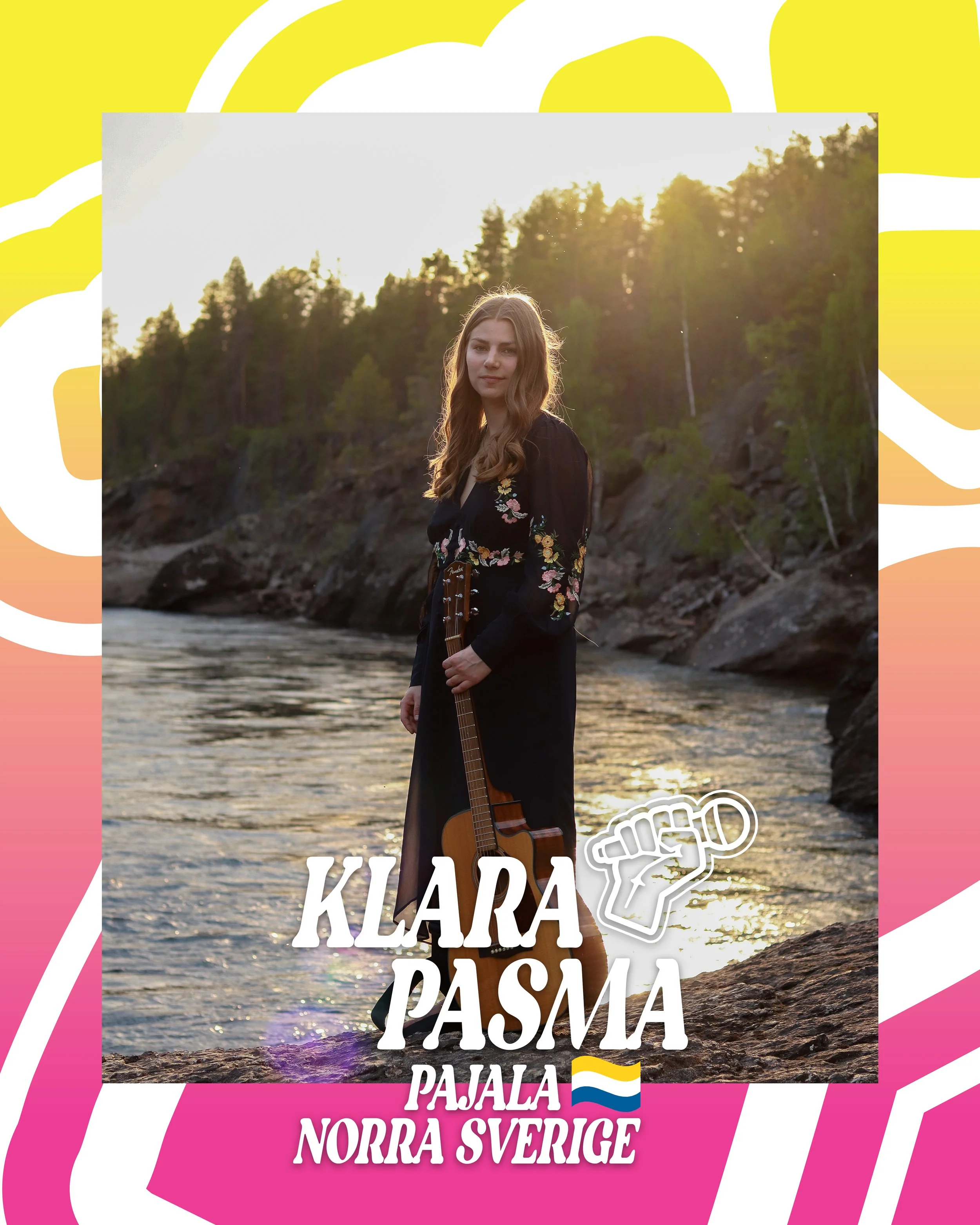
Klara Pasma was born and raised in Pajala by the Torne River, on the border betweenpresent-day Finland and Sweden. She sings in her mother tongue, Swedish, but also inMeänkieli, the historical language of these border areas. Singing and writing songs has been her way of learning a language once lost to her,a languagespoken byhergrandparentsand great-grandparents. She writes about sorrow and injustice, about beingyoung in a small community, and about finding yourself and your place in the world. Hersongs are deeply rooted in the local culture of the Torne Valley.
After the border between Sweden and Finland was drawn in 1809, the state forced theofficial Swedish language onto the population on the west side. Today, Meänkieli – «ourlanguage»– is a vehicle for rebuilding a culture, bridging borders and connecting the pastand the present, just like Klara Pasma’s wonderful music is.
Klara Pasma has sung in Meänkieli for the Swedish royal couple and for the whole nationon national TV – but she can also just bring her guitar and tour her communities by bike.We are delighted to have Klara and her amazing voice and language with us for Pan-ArcticVision 2026!
Klara Pasma is selected participant of Pan-ArcticVision in cooperation with Bd Pop Norrbotten, Luleå, Sverige.
Annie Bartholomew - Juneau, Alaska
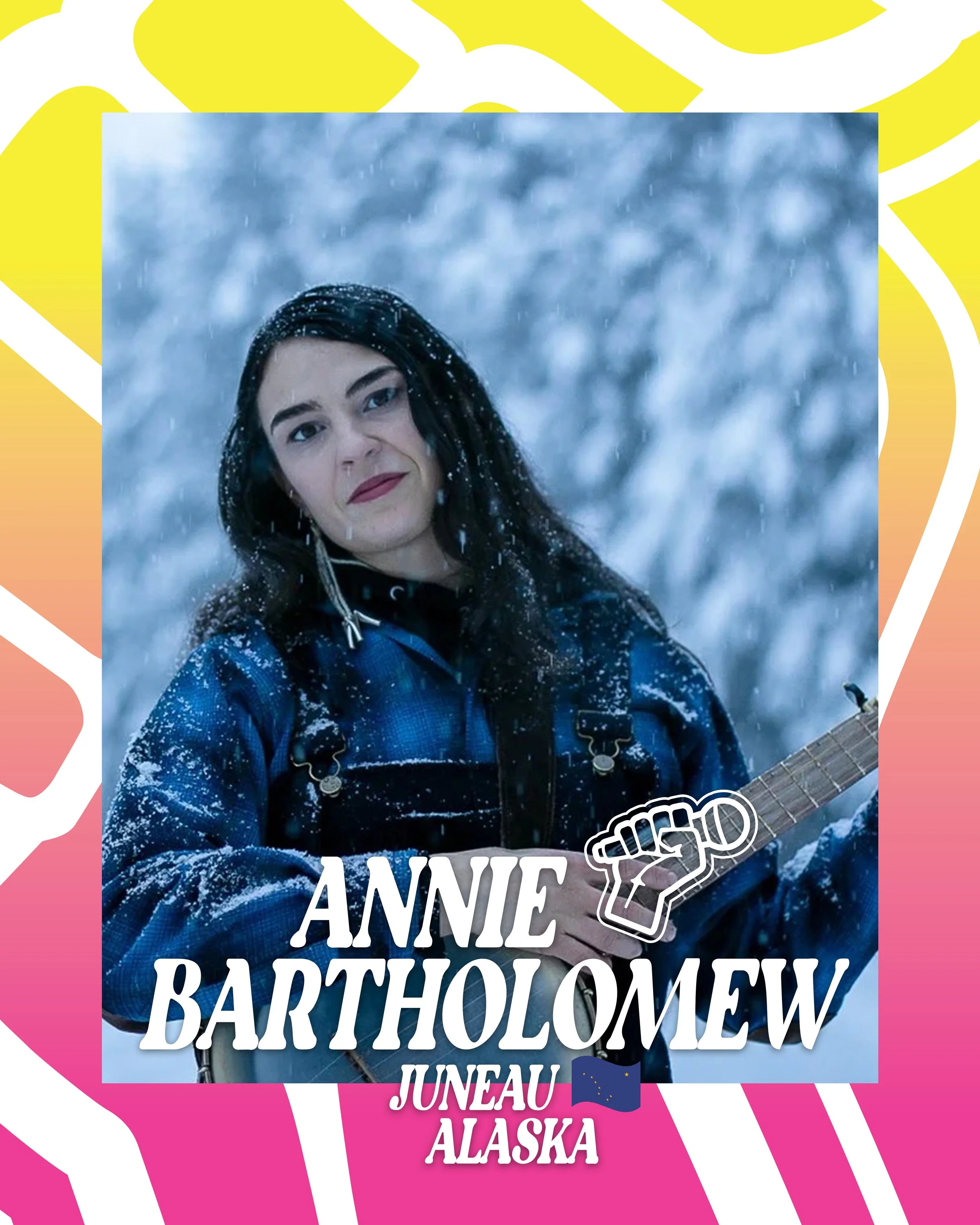
Introducing Annie Bartholomew–songwriter, clawhammer banjo player, and folk artistfrom Juneau, Alaska.
Inspired by the ghosts of Alaska’s mining past, her debut album,Sisters of White Chapel,uses historic source material and Appalachian stringband traditions totalk about survival, resilience, and revelry through her songs about women and sex workers who travelednorth during the Klondike Gold Rush.
The Gold Rush and colonization brought new instruments and musical styles to the interiorof Alaska. Indigenous cultures, like the Athabascan, took these new possibilities andturned them into their own unique styles, making today’s folk music of Alaska a complexmix of indigenous expressions, colonial history, and distinctlocal storytelling, always rooted in the people, culture and land.
Annie’s hometown Juneau, a city of 32,000 inhabitants, is the state capital of Alaska, located by the sea in the southern part of the state, surrounded by glaciers and steep mountains.
On top of playing music, Annie also works for the Alaska Department of Fish and Game, helping to facilitate the fisheries and game processes between state regulations and local communities.
Annie Bartholomew and her music have been on our radar for years – we are extremely happy to finally bring her into Pan-ArcticVision. She comes to the Faroe Islands with her long–time collaborator, friend and multi-instrumentalist Kat Moore.
Annie Bartholomew is selected participant of Pan-ArcticVision in cooperation with Anchorage Museum.
Marius DC - Tórshavn, Føroyar (FO)
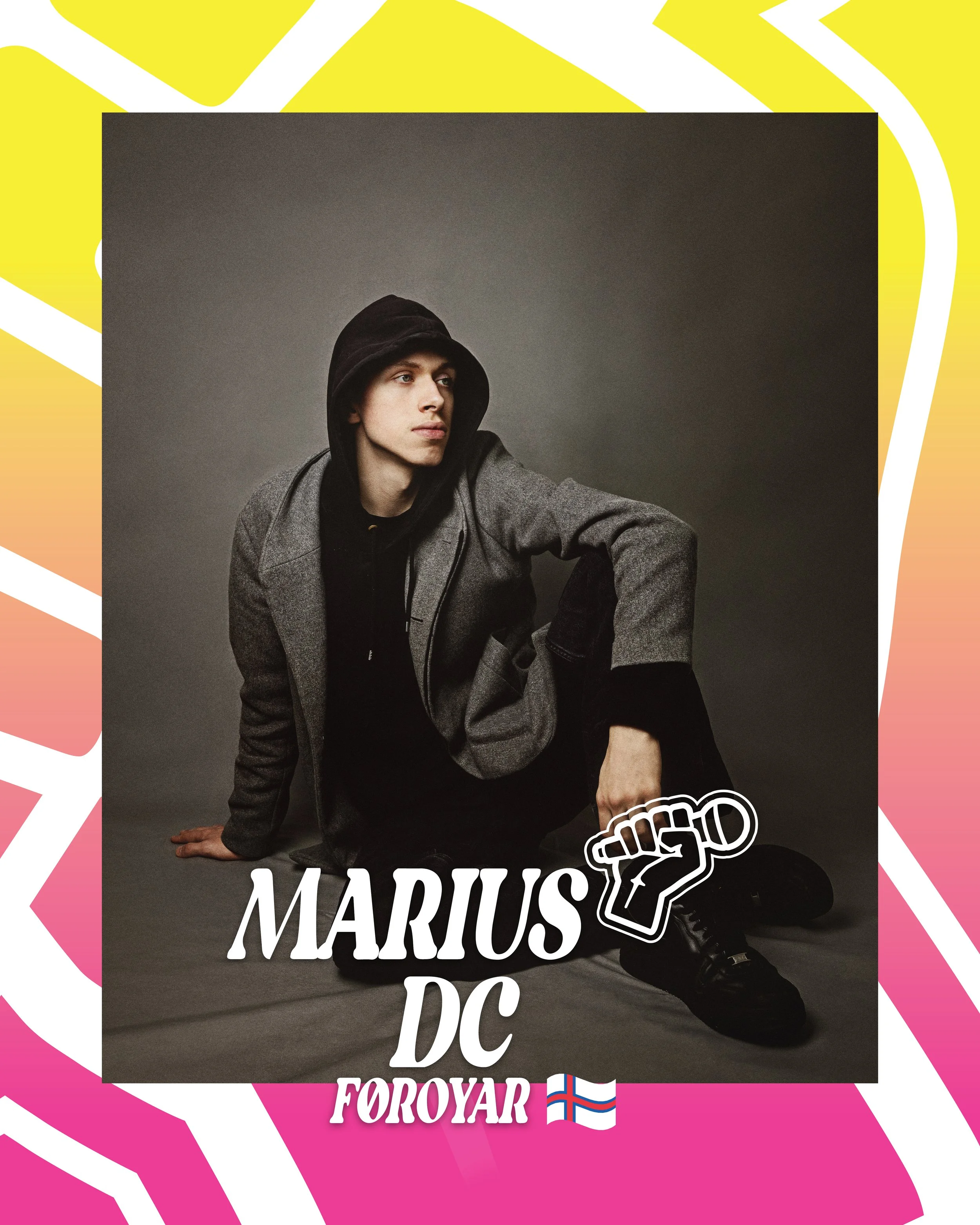
At just 22 years old, Faroese rapper-producer Marius DC has already built an eventful eight-year career from his home town of Tórshavn, the capital of the Faroe Islands. Starting out writing in English, his local success really took off when he turned to his native Faroese, a language only understood by the 54,000 inhabitants of the islands (plus about 25,000 more in exile in Denmark).
Marius Dam Christophersen won the Faroese music competition Sement ("Concrete") back in 2022, and has not been looking back since. This year has been even more eventful, with concerts in Denmark, the UK and at the major Faroese G! Festival. His fourth EP release came in April this year, with the first single titled "Free Gaza"!
Marius DC is high and low in the Faroese art scene. He is collaborating with a number of central musicians, and also had his acting debut on the stage of the National Theater this year. Marius will come to Pan-ArcticVision directly from the legendary Pumpehuset in Copenhagen, and will leave again for Nuremberg Pop afterwards.
Falinn Gjóður - Reykjavík, Ísland (IS)
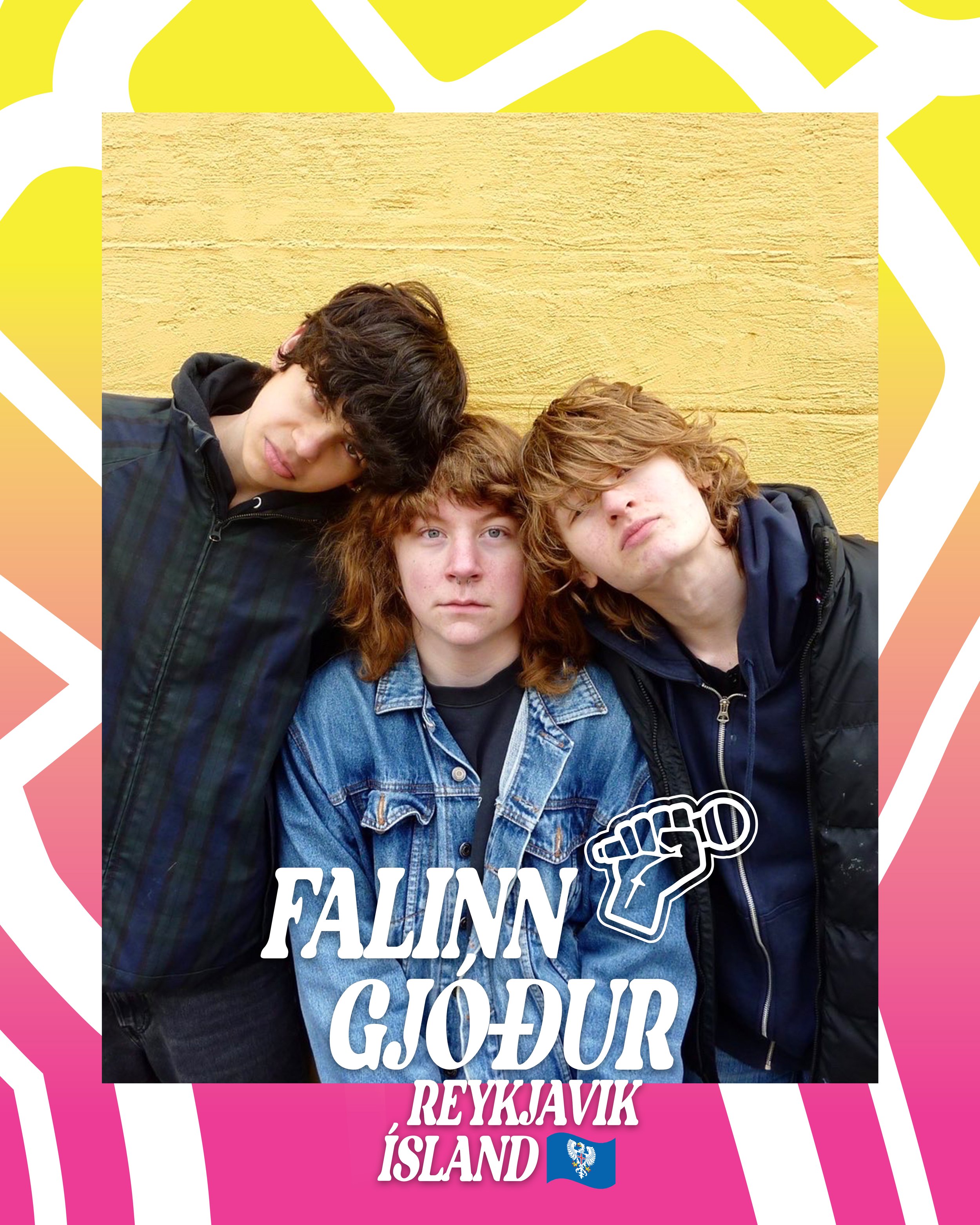
For the third year in a row, Pan-ArcticVision presents the winners of Músíktilraunir, the national Icelandic battle-of-bands for young musicians. The three 16-year-olds from Reykjavík making up Falinn Gjóður describe their music as "...biomedically engineered to give you the feeling of being an osprey in hiding. Perfect for any occasion." The press is using other words, and has described the music of Aron Elí Arnarsson, Baldur Þórarinsson and Þorri Hrafnsson as contemporary folk prog-rock with a legacy from Frank Zappa...
Falinn Gjóður means "Hidden Osprey" in Icelandic. Contrary to what you might think, the gjóður – also called fiskiörn – is not a bird native to Iceland, even if it lives off fish. Only a few rare specimens have ever been spotted on the island. But Ísland is not a stranger to large birds of prey. The Gammur is a mythological figure and one of the guardian spirits of the country, found in the national coat of arms, portrayed as somewhere between an eagle, a vulture and a griffin, protecting the people of Ísland from intruders. That bird is also found in our alternative flag for Íceland (who knows, maybe it’s really an osprey in hiding?)
Falinn Gjóður has just started their journey in the music scene, heading for the major festival Iceland Airwaves after joining Pan-ArcticVision, and currently working on their debut album.
Falinn Gjóður is selected in cooperation with Músíktilraunir and Norræna húsið, Reykjavík, Iceland.
Piunguałaq & Tooma - Kangiqtiniq & Iqaluit, Nunavut

Christine Piunguałaq Tootoo from Kangiqtiniq (Rankin Inlet) and Tooma Laisa from Iqaluit both grew up and live in Nunavut in Northern Canada. They perform katajjaq (throat singing), qilaujjaq (drum dancing) and pisiit (traditional songs), all ancient forms of Inuit music. Piunguałaq also plays the accordion, as the instrument was adapted into Inuit culture through Scottish and Irish whaling ships visiting Arctic Canada in the 19th century.
Piunguałaq & Tooma are deeply connected to their culture through both traditional and contemporary Inuit music, and have been mentored by Inuit elders to learn traditional pisiit. Preserving these personal "storytelling-songs" and their distinct musical style and language has become a passionate journey for both of them in their practice over many years.
Iqaluit is the administrative capital of Nunavut with about 8000 people, Rankin Inlet has a bit over 3000. Both communities have Inuit majorities and are located on the coast. Both communities can only be reached by plane or cargo ships during the summer months – there are no roads connecting Nunavut to the rest of Canada.
Alongside the duet with Tooma, Piunguałaq has recently released the album Anirniliit Suli, which was nominated for a Juno Award (the Canadian version of a Grammy Award) in the category "Traditional Indigenous Artist or Group of the Year".
Piunguałaq & Tooma are selected as participants through a live audition in cooperation with Alianait Arts Festival in Iqaluit.
Роман Гладышев / Roman Gladyshev - Мурманск / Murmansk, RAX
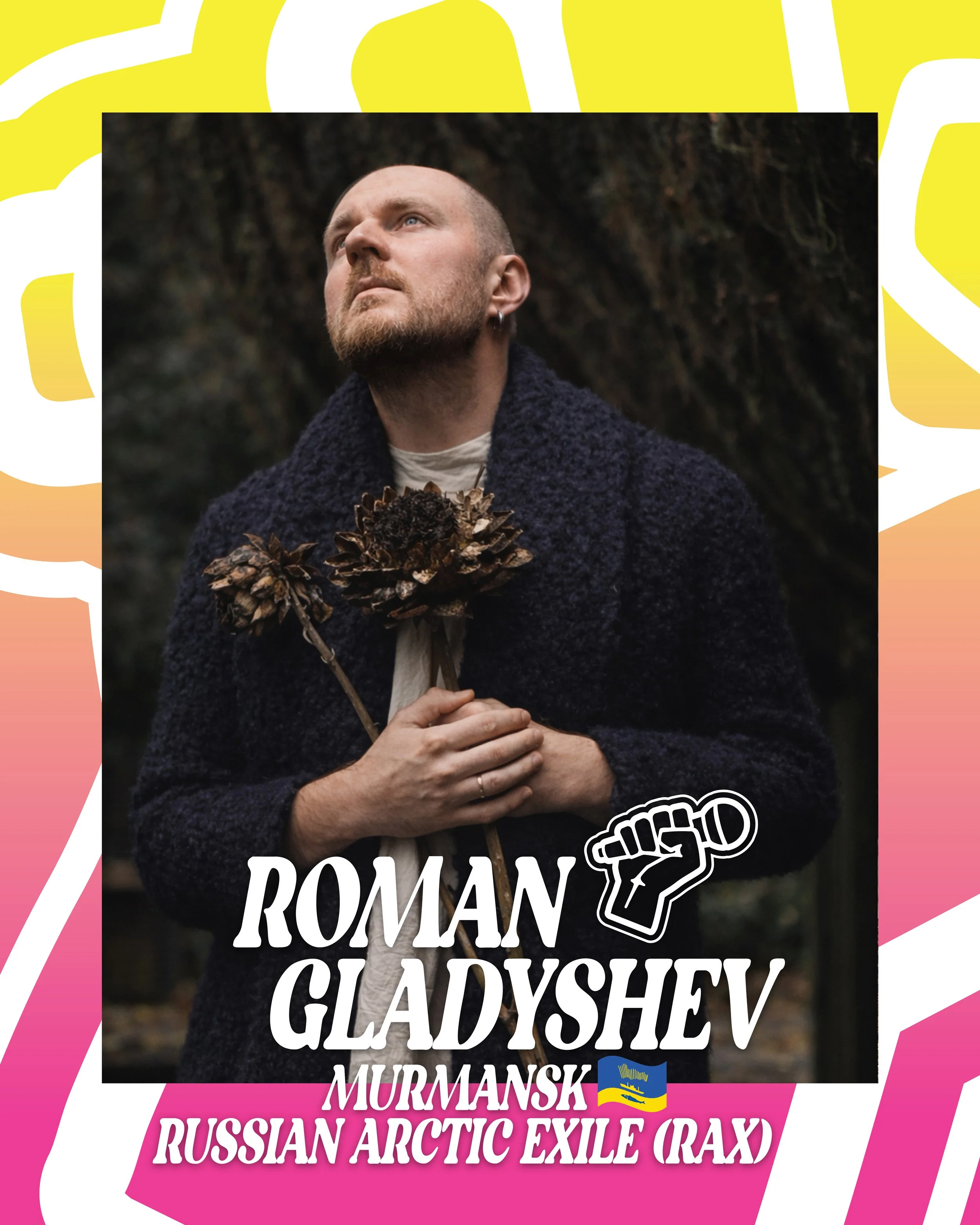
Roman Gladyshev is a musician, composer and multidisciplinary artist born and raised in
Murmansk, the largest city in the Russian Arctic, and the largest city of the world above the Arctic Circle. For more than a decade, he was one of the key artists on Murmansk’s independent music scene and an active member of the cross-border Barents Region cultural community. He toured across Northern Norway, Sweden, Finland, and played an active role in creating the international cultural festival Barents Bird in Murmansk. He also worked as an actor with Arctic Theater and created several original immersive performances exploring the history and Arctic identity of the Murmansk region.
His music can be described as Arctic Russian underground — a meeting point of experimental rock, avant-garde songwriting, northern folk imagination and theatrical performance. His songs move between fragile melodies and raw expression, transforming displacement and loneliness into something ritualistic, playful and sometimes unsettling. In Roman Gladyshev’s music, the Arctic is present as a particular way of seeing the world, shaped by polar nights and the midnight sun, endless distances and the strange intimacy of life at the edge of the world.
After the full scale invasion of Ukraine in 2022, the cross-border cultural cooperation between Russia and its Nordic neighbors is almost gone. The bright vision of the Barents Region – to connect people across borders – is dead. For Roman, now living far from the place where he was born, his music today explores what happens when a person loses their native landscape but continues to carry it within. The Arctic becomes an inner territory — a place of memory, exile, belonging and ancient laughter of the North.
Roman Gladyshev is selected as participant in cooperation with Pikene på Broen in Kirkenes.
Ivar Beddari - Páččjok/Pasvik, Nord-Norge/Sápmi
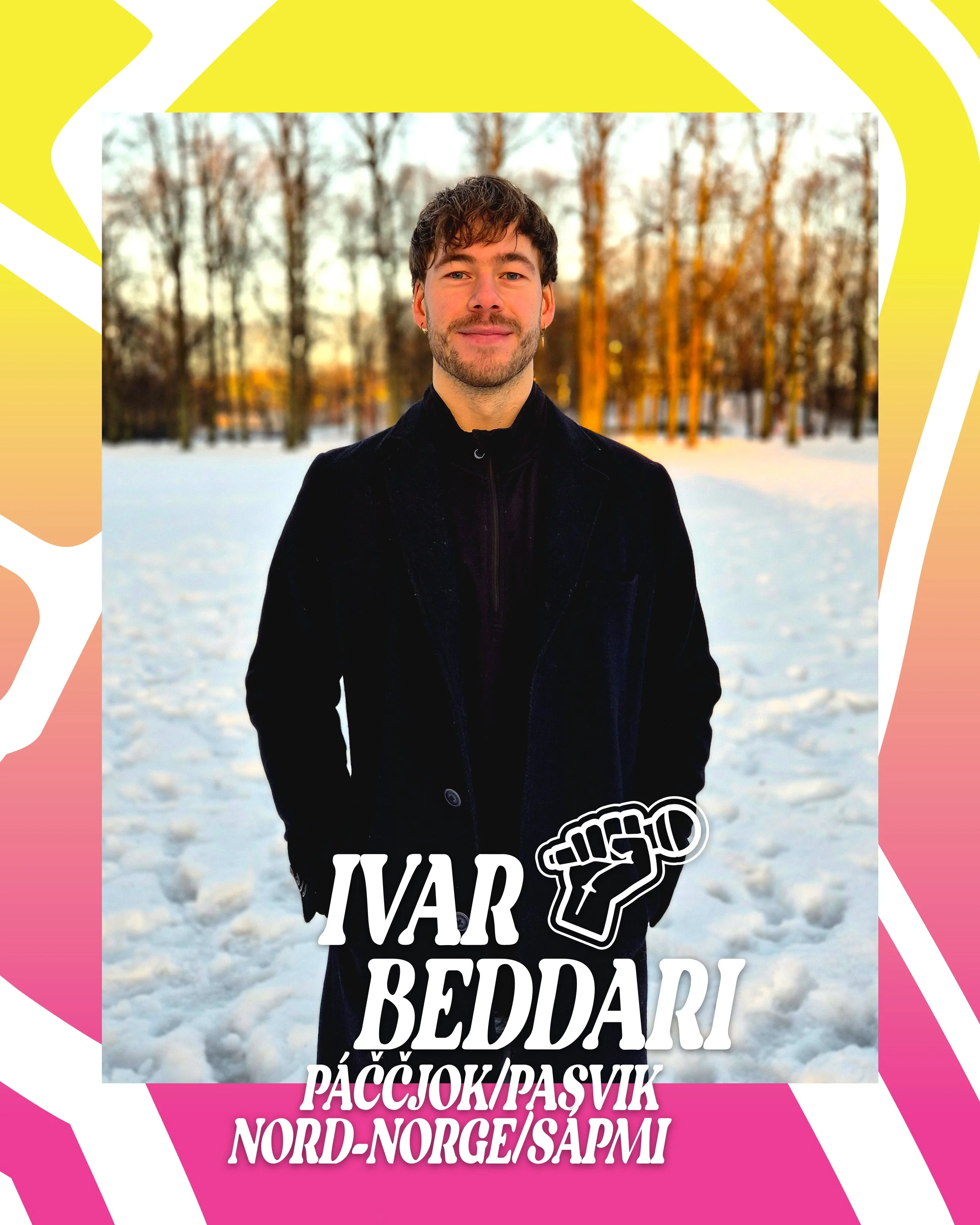
Ivar Beddari is a storyteller from Páččjok/Pasvik in Northern Norway, in the east side of Sápmi. He tells his stories in many ways, as an actor, musician, composer and dramatist. He develops concepts, texts and poetry for his own work and those of others, with a focus on the north and the Arctic. Páččjok river and woods have a central place in his storytelling, whether in songs told through animals, knowledge as immaterial cultural heritage or the ecological diversity and cycle of his native lands.
Páččjok is the border area between present day nations of Norway, Russia and Finland. The valley and river has for centuries been a melting pot of cultures, languages and lifestyles, at times forming the hard border between east and west, as both today and during the Cold War. Ivar Beddari grew up in this cultural and geopolitical hotspot, with family, language and traditions coming from multiple sides of borders. This mix can clearly be seen in his art.
As actor he has been part of movies like Ellos Eatnu by Ole Giæver and Sulis 1907 by Nils Gaup. He also composes for theatre and TV. In recent years he has written text for musical works with musician Arve Henriksen and the Norwegian Radio Orchestra, Emil Kárlsen and his own performance “The Heritage of the Northeast”. Current works in development are “Kapittel 21” with Bernt Bjørn, based on text from the report by the Norwegian truth and reconciliation commission.
Nuunu - Sisimiut, Kalaallit Nunaat
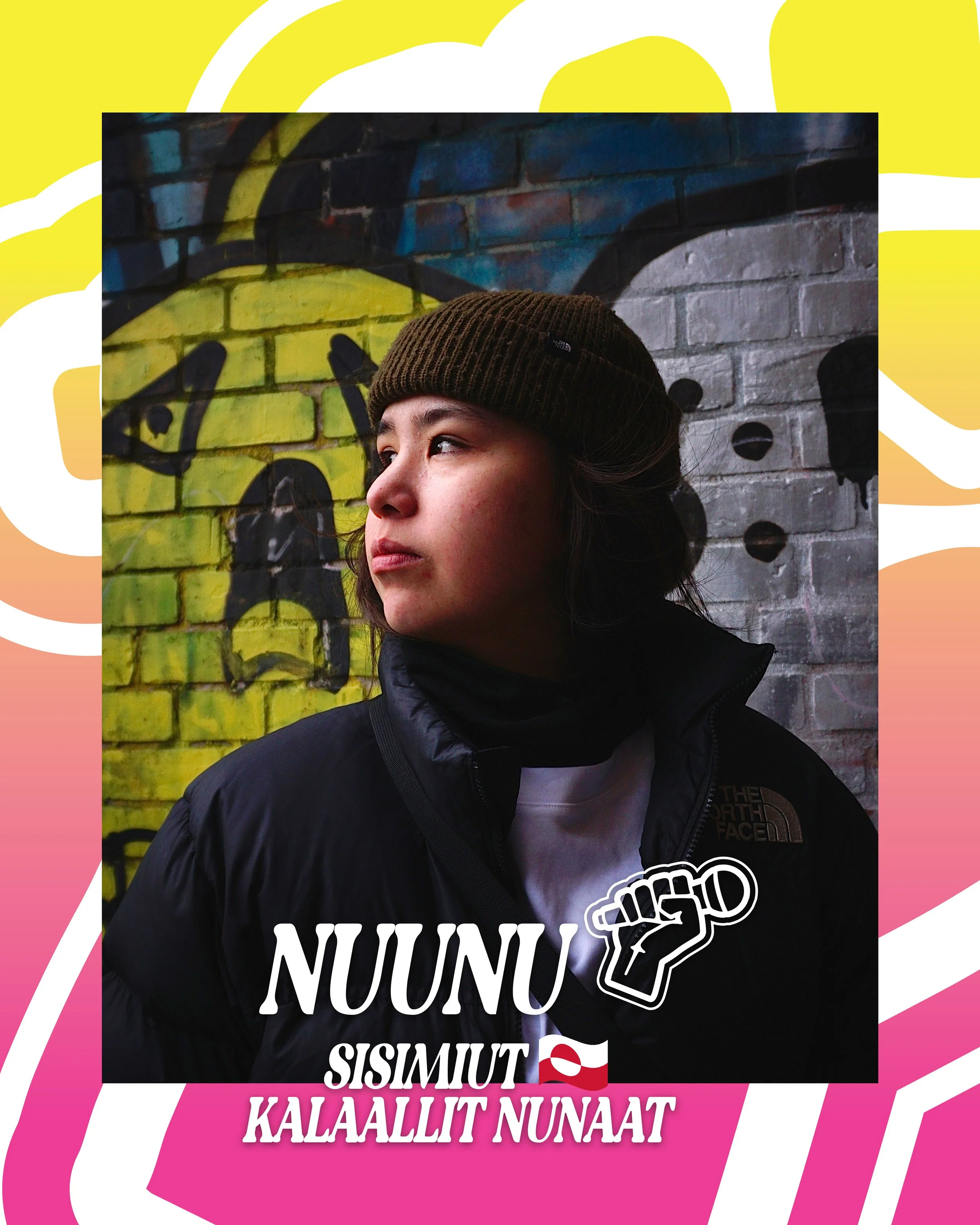
Nuunu is one of the most promising upcoming voices on the Kalaallit music scene. Her songs revolve around love and the challenges of youth; about loving, losing and experiencing life for better or worse. With honest lyrics, captivating guitar playing and catchy melodies, she creates a musical universe that invites listeners to sit back and immerse themselves.
Nuunu is a native of Sisimiut, the second largest city of Kalaallit Nunaat, located up the coast north of the capital Nuuk. Sisimiut is home of the legendary festival Arctic Sounds that for over a decade has both backed local musicians on their journey out, and brought lots of international and Arctic musicians to Kalaallit Nunaat.
Nuunu has performed on the stages of Arctic Sounds, but also at festivals like Qoqqut and Riddu Riđđu. She has made a name for herself in both Kalaallit Nunaat and the Nordics. Nuunu released her debut single “Shy Lover” together with performance artist Laakkuluk Williamson from Nunavut in the summer of 2026; a sincere debut that telles the story of two young women falling in love, about longing, and the courage to step forward as oneself and hope to be caught.
Welcome to Pan-ArcticVision, Nuunu!
Nuunu is selected in cooperation with Arctic Sounds.
Niko Valkeapää & Miro Mantere - Pohjois-Suomi / Sápmi
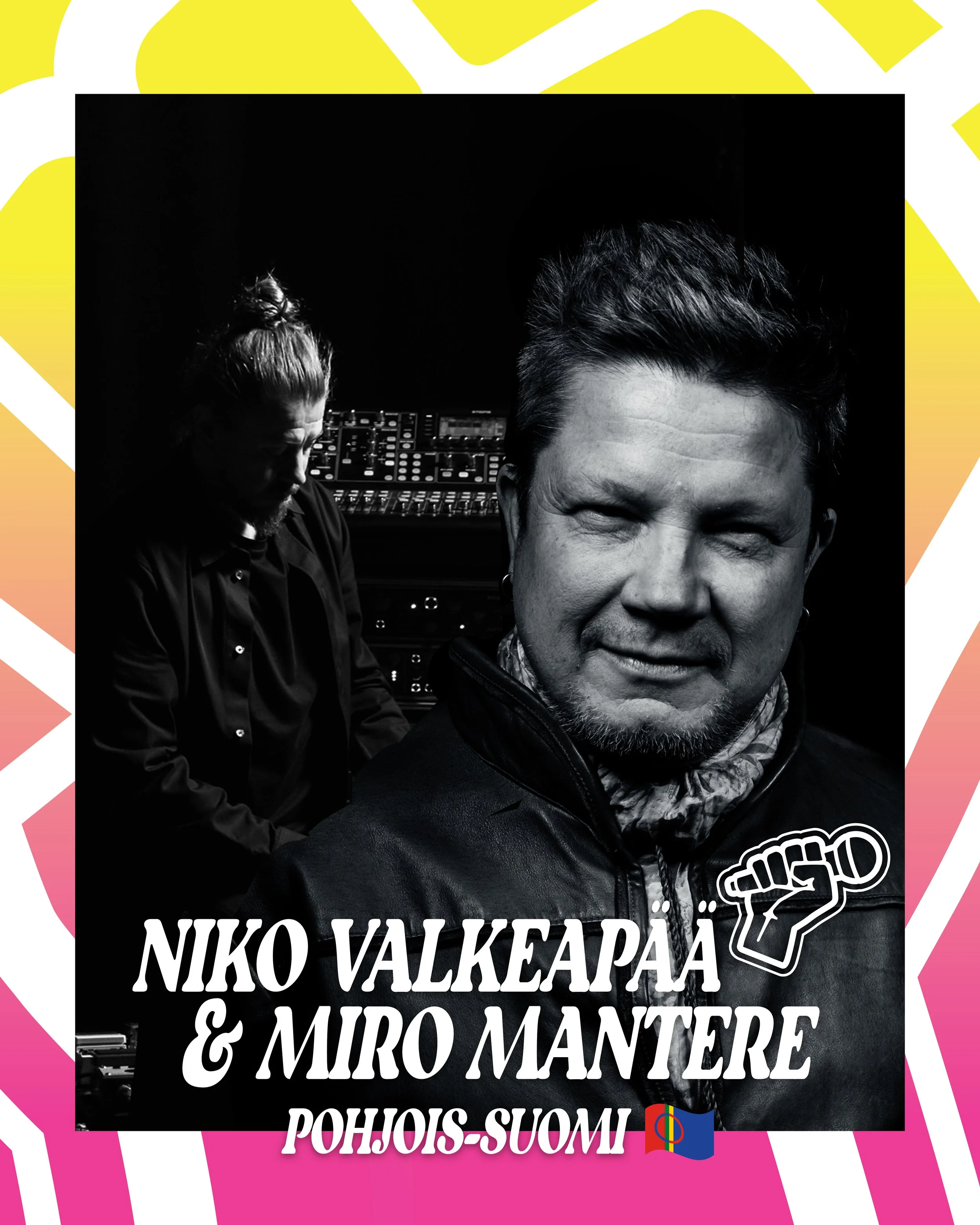
Niko-Mihkal Valkeapää is a Sámi musician, joiker and actor from Enontekiö on the Finnish side of Sápmi. He is joined on stage by the Finnish live-looper and sound artist Miro Mantere in an exciting and genre-defying duo.
Niko-Mihkal Valkeapää is a true border-crossing resident of the Arctic. Born on the Finnish side of Sápmi, he moved to Guovdageaidnu on the Norwegian side and established himself as a central musician on the Sámi music scene, with numerous album releases and prizes. He has won both a Spellemannpris – the Norwegian Grammy – and Sámi Grand Prix – the Sámi version of Eurovision. Niko works with both traditional joik and modern expressions, always with a strong connection to his roots and the Sámi language.
Niko has been an elected representative to both the Norwegian and the Finnish Sámi Parliaments and is currently also a member of Sámiráđđi, the cross-border Sámi Council, one of the world’s oldest indigenous peoples' organizations.
Now living in Tromsø, Niko is the nephew and godson of Áillohaš, the monumental Sámi multi-disciplinary artist, author, indigenous activist and nation builder.
Miro Mantere is a pioneer of live-looping and electronic music in Finland, using DIY instruments to create complex, multi-layered soundscapes from scratch. Currently living in Helsinki, he is widely recognized for his broad work across film, theater and performances, and he has worked extensively with Sámi artists in Pohjois-Suomi. Miro and Niko have earlier collaborated in creating music for installations and live performances, and they are currently working on new sounds for a theater play at Beaivváš Sámi National Theatre.
Welcome to the Pan-ArcticVision, Niko and Miro! Wonderful to have you with us!
Kokym / كوكيم - Palestine - PAV 2026 Special Guest
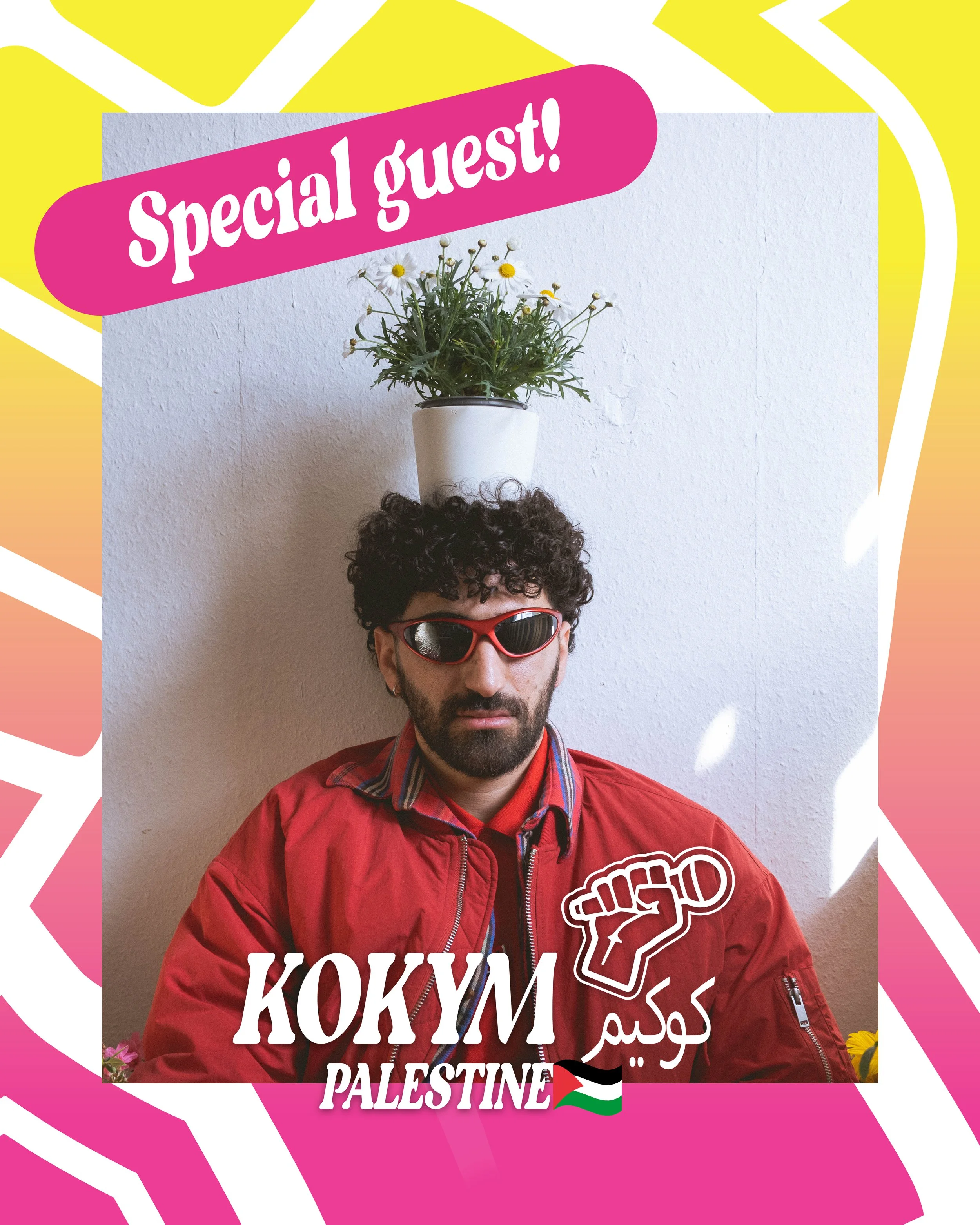
Pan-ArcticVision is all about song, community and independence – it is about making local voices, local languages and local perspectives heard, it is about fighting for self determination and freedom from oppression.
This is a global struggle.
Pan-ArcticVision is proud to introduce a special solidarity guest who is using his music to voice the life of a community and a people in one of the hardest and most violent struggles against oppression and injustice today.
Kokym / كوكيم is a Palestinian independent pop artist born and raised in the occupied Palestinian village of Jatt Al-Muthalath, close to Jenin on the West Bank. He has pioneered “Fallahi Pop,” a genre he created by blending alternative Arab pop with rural Palestinian folklore and dialect. Kokym taught himself music from the age of 13. In 2015, he moved to Istanbul to study Arabic music under Syrian maestro Maher Na’ana’a. Since releasing his debut single in 2018, Kokym has dropped over 50 tracks and two EPs, building a powerful presence across Palestine, Jordan, and the Arab diaspora.
“I’m trying to get out of the box and show you different aspects of Palestinian art and how it should not always be misery. (...) What I'm trying to do is humanize us, inspire strength and power to the people through music, and make them feel the way I feel: that we are actually very cool, strong, and trendy."
If there ever is such a thing as a "Eurovision" where Palestine can take part, Kokym would have been a brilliant participant.
If Israel can join the Eurovision, surely Palestine can be a guest of the Pan-ArcticVision.
Welcome to the party, Kokym!
